Paperwork
Ongoing
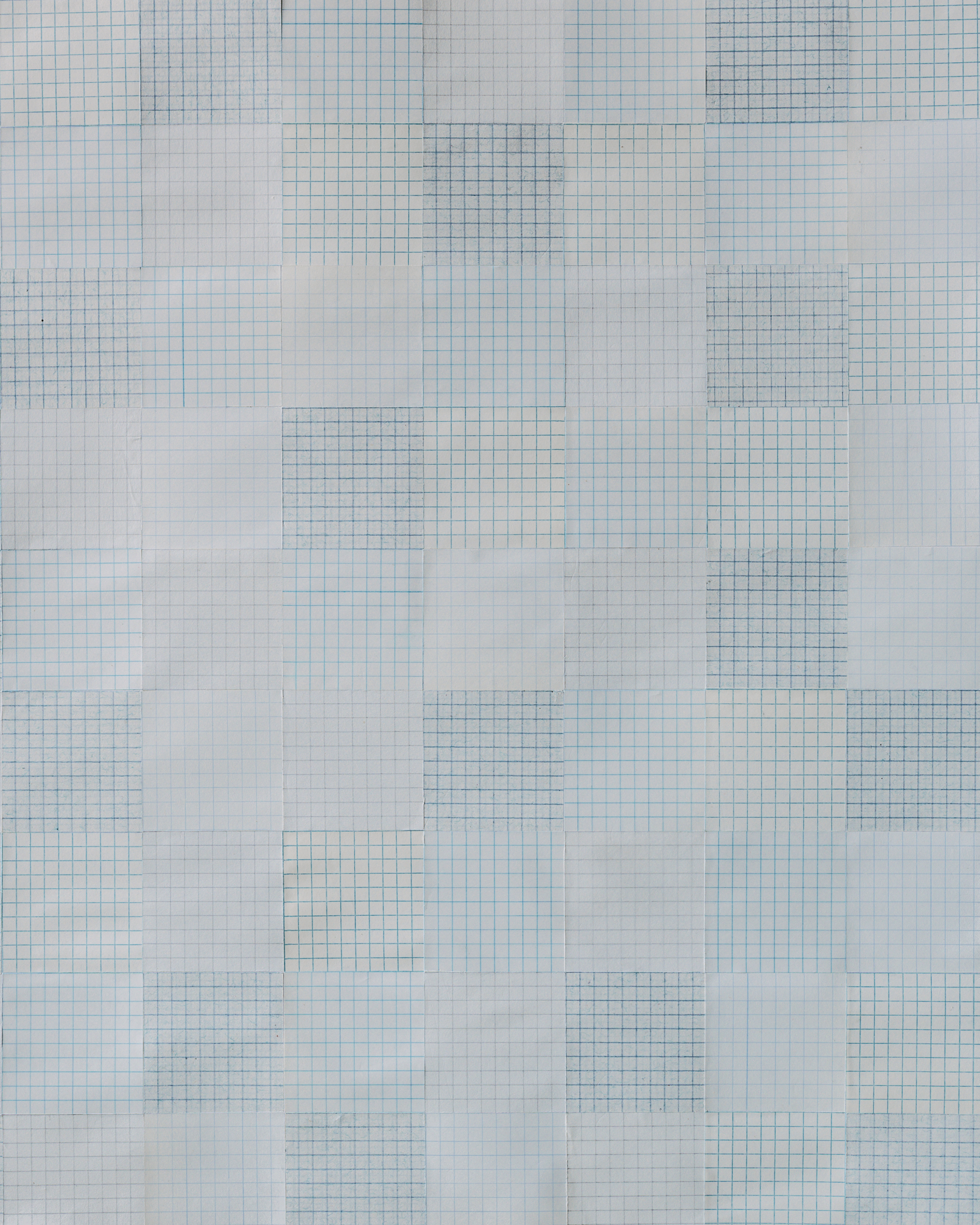
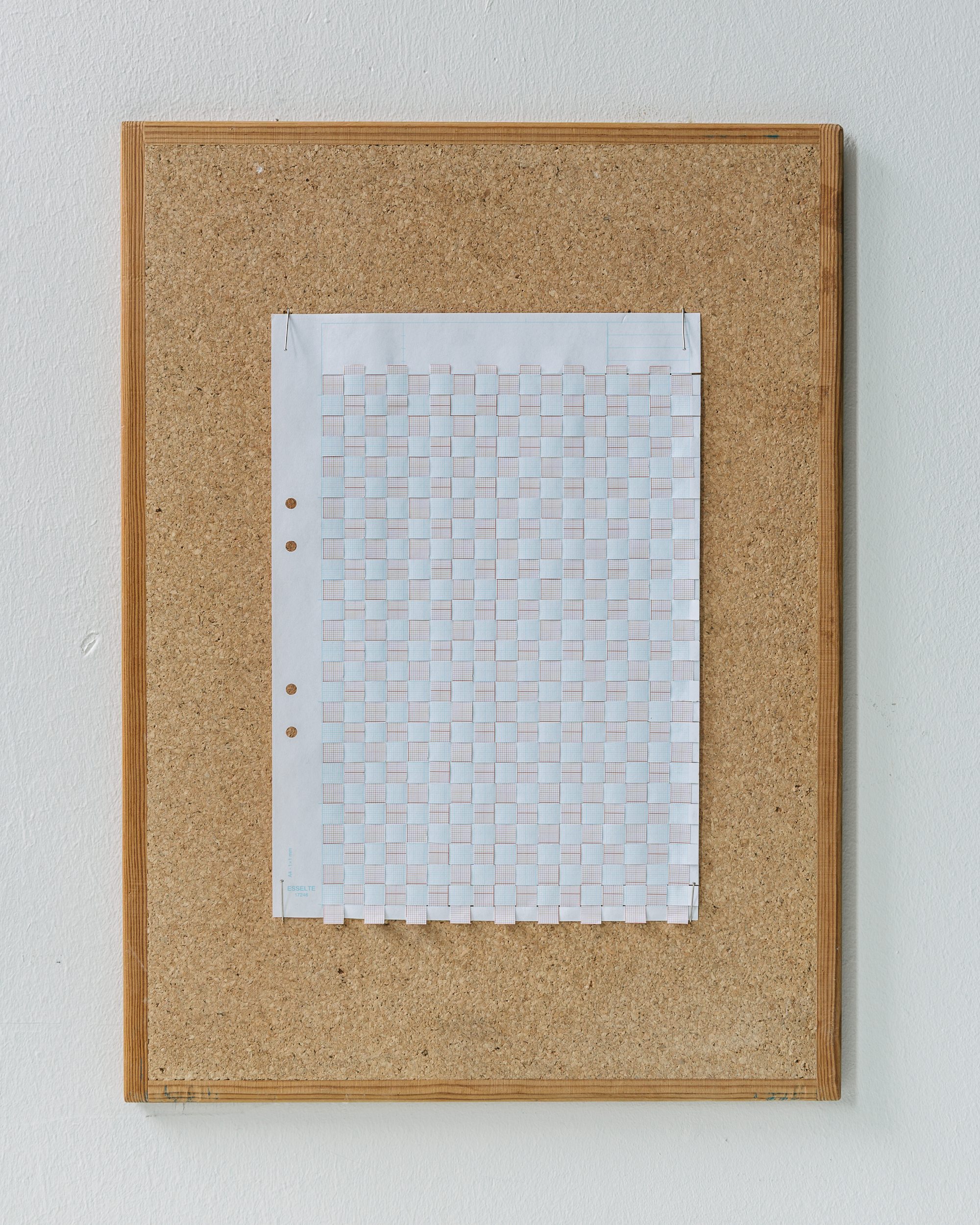
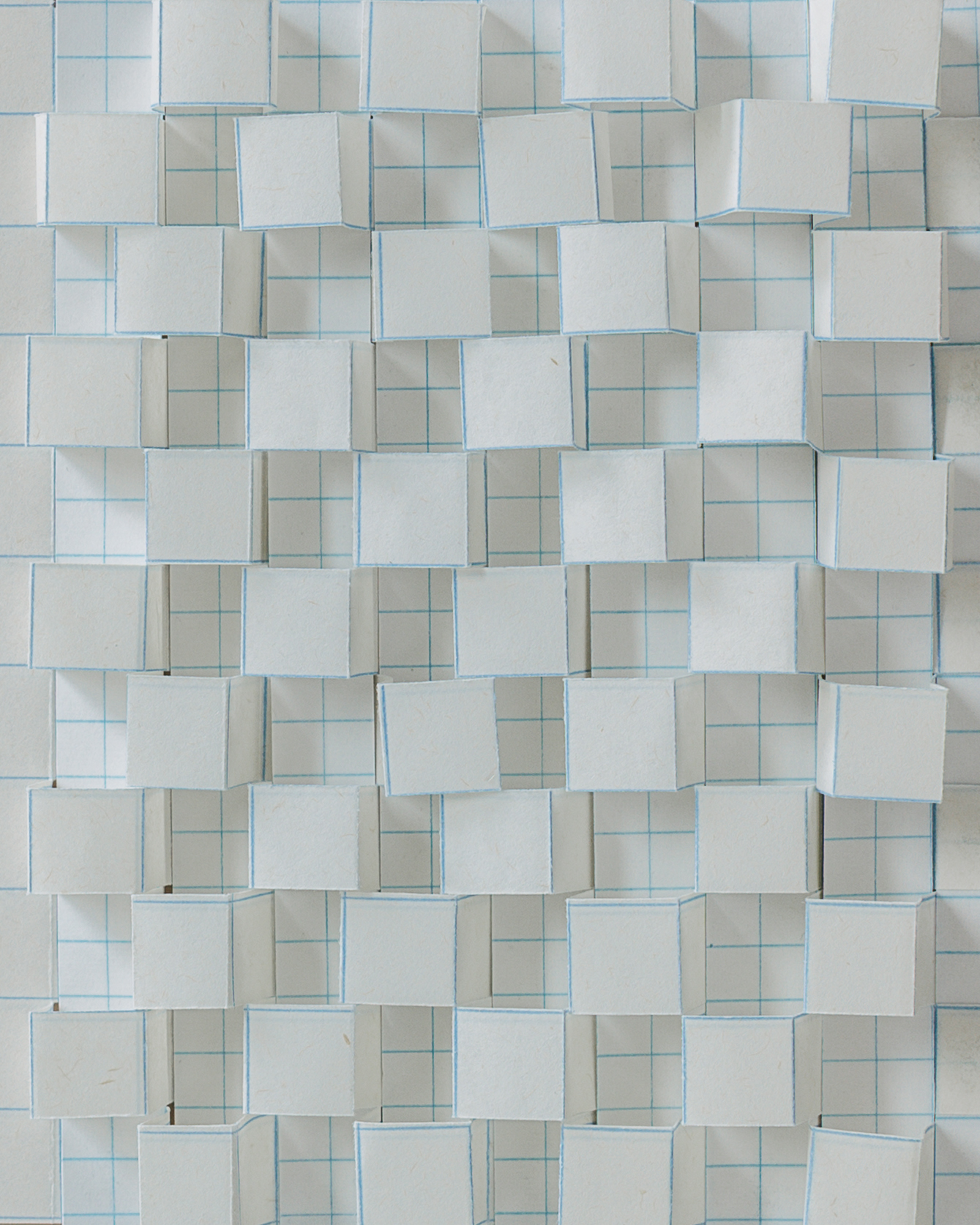
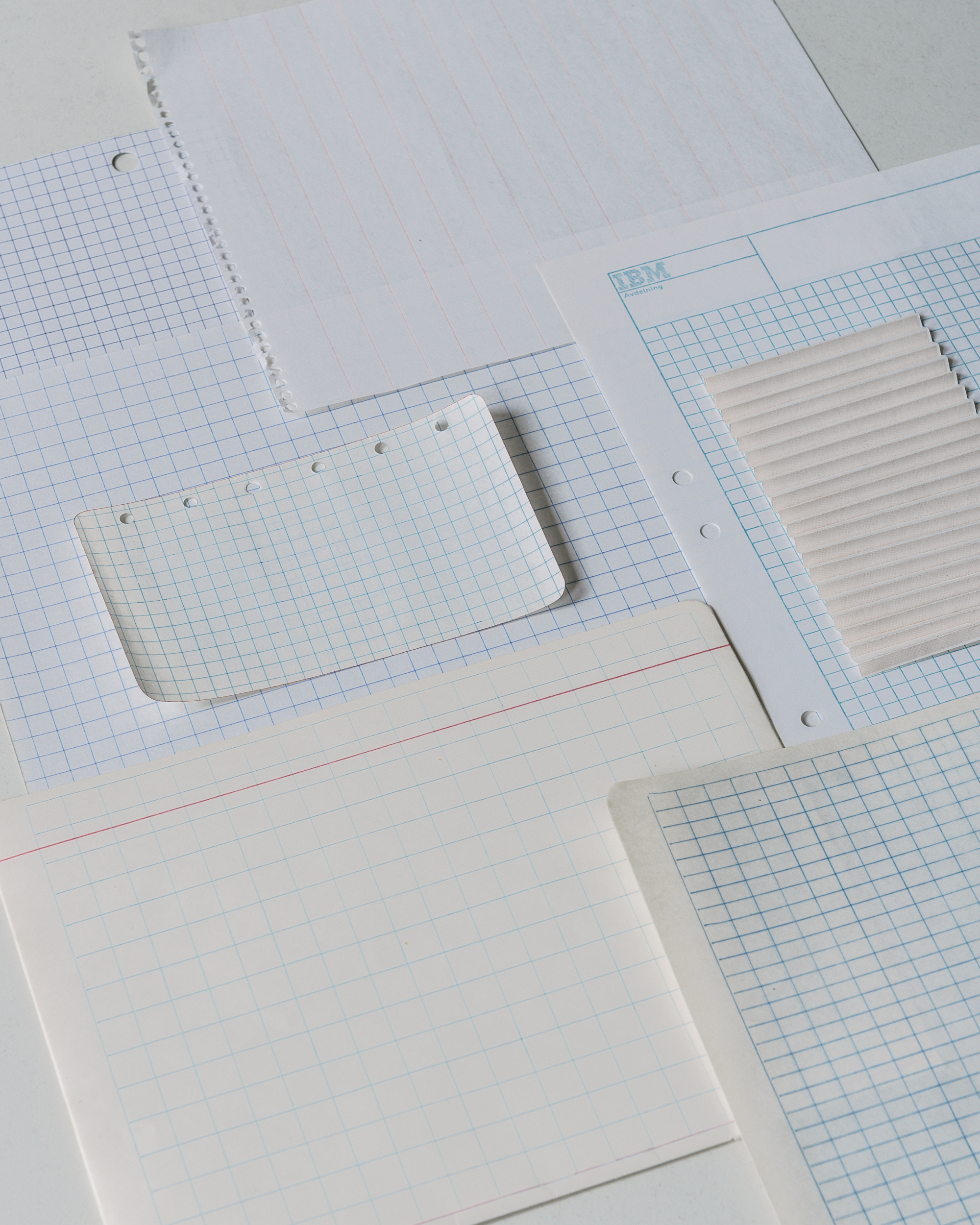
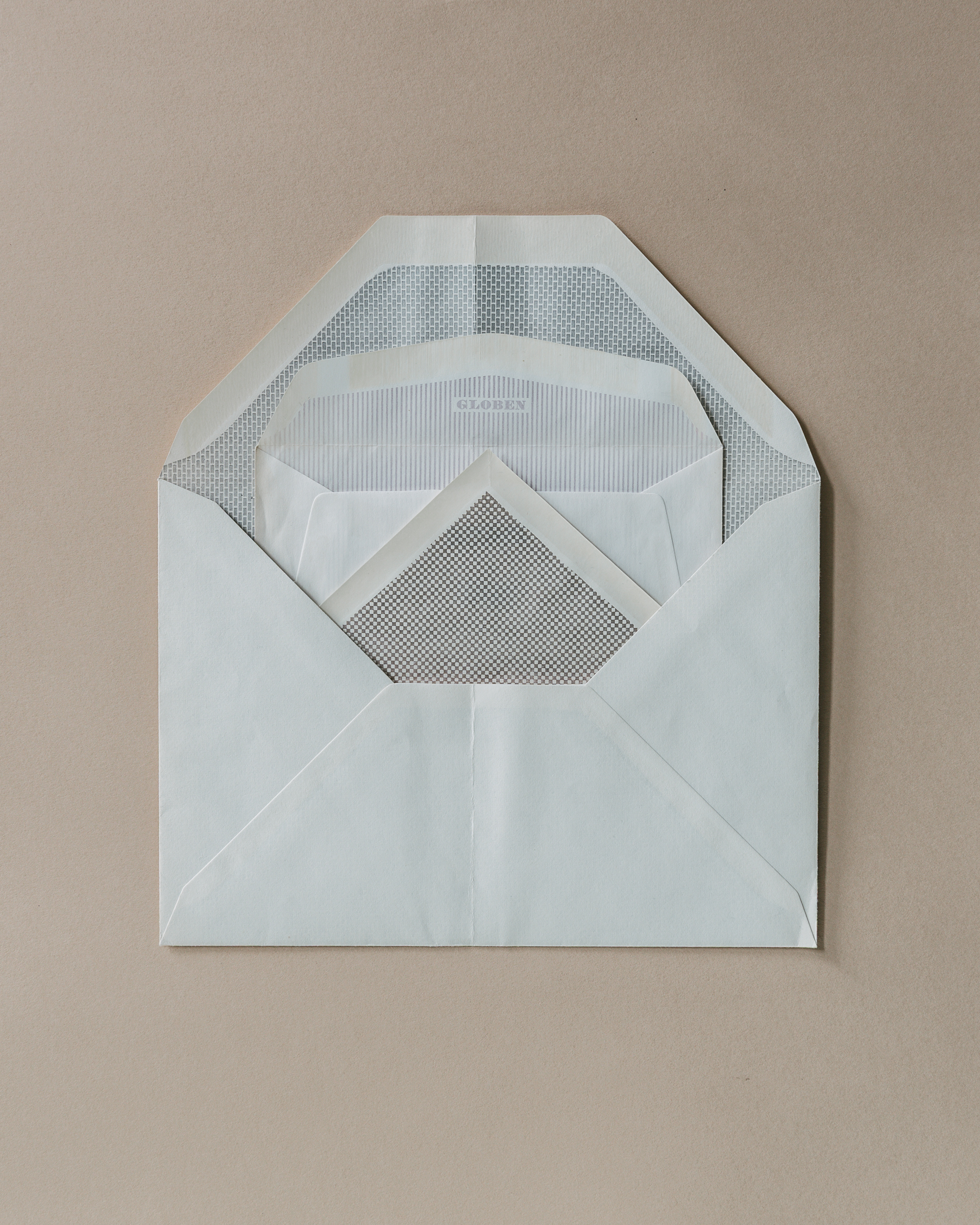
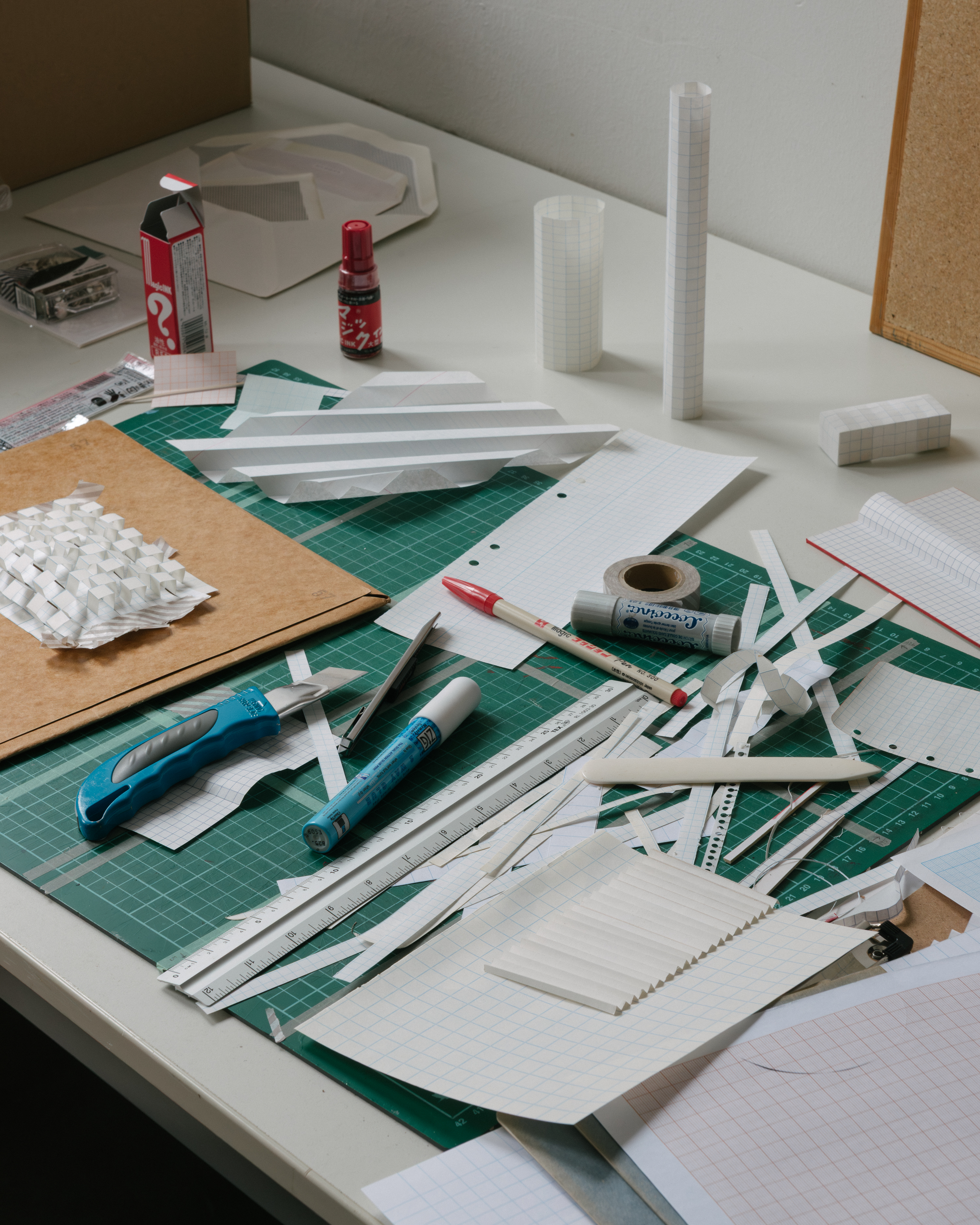
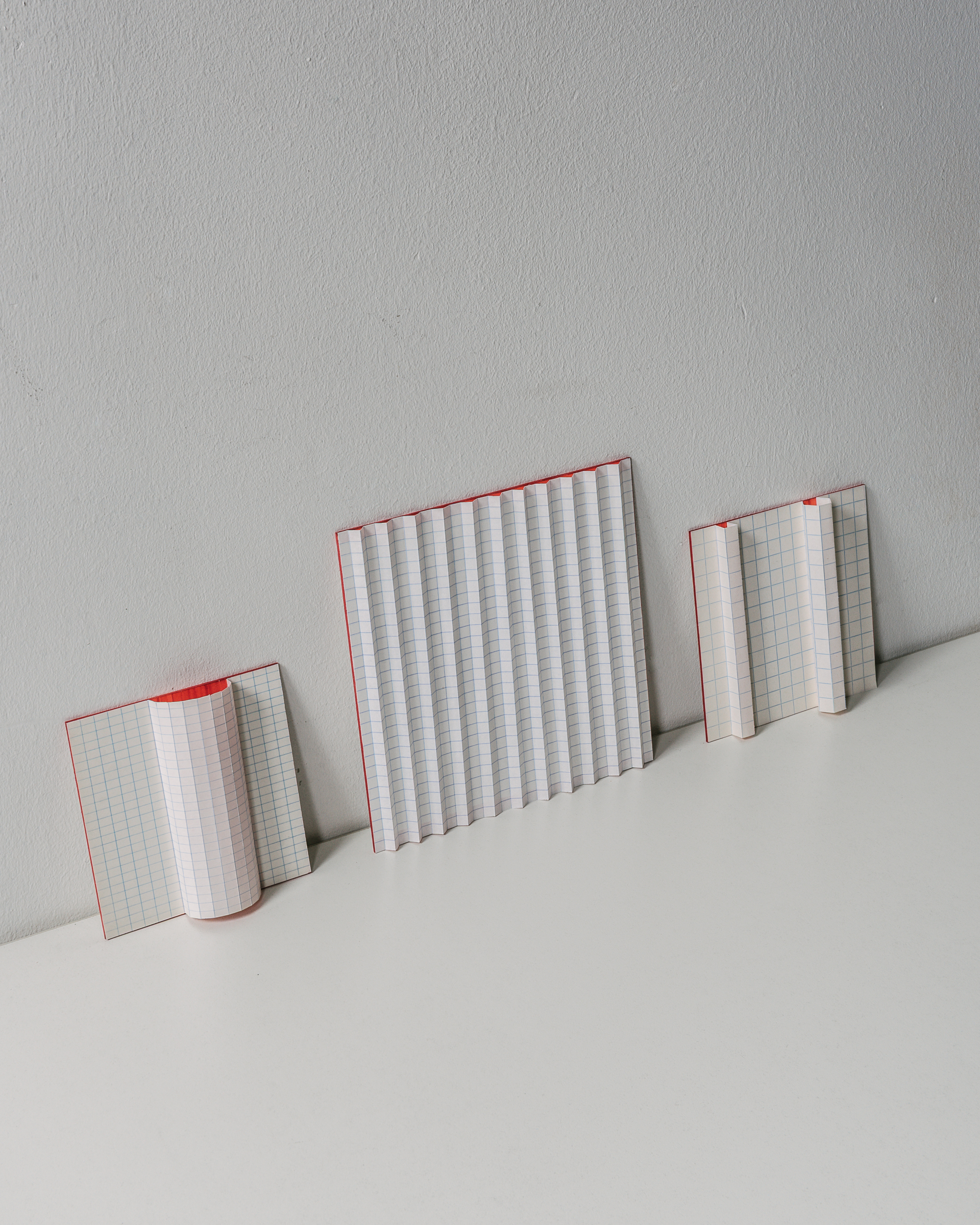
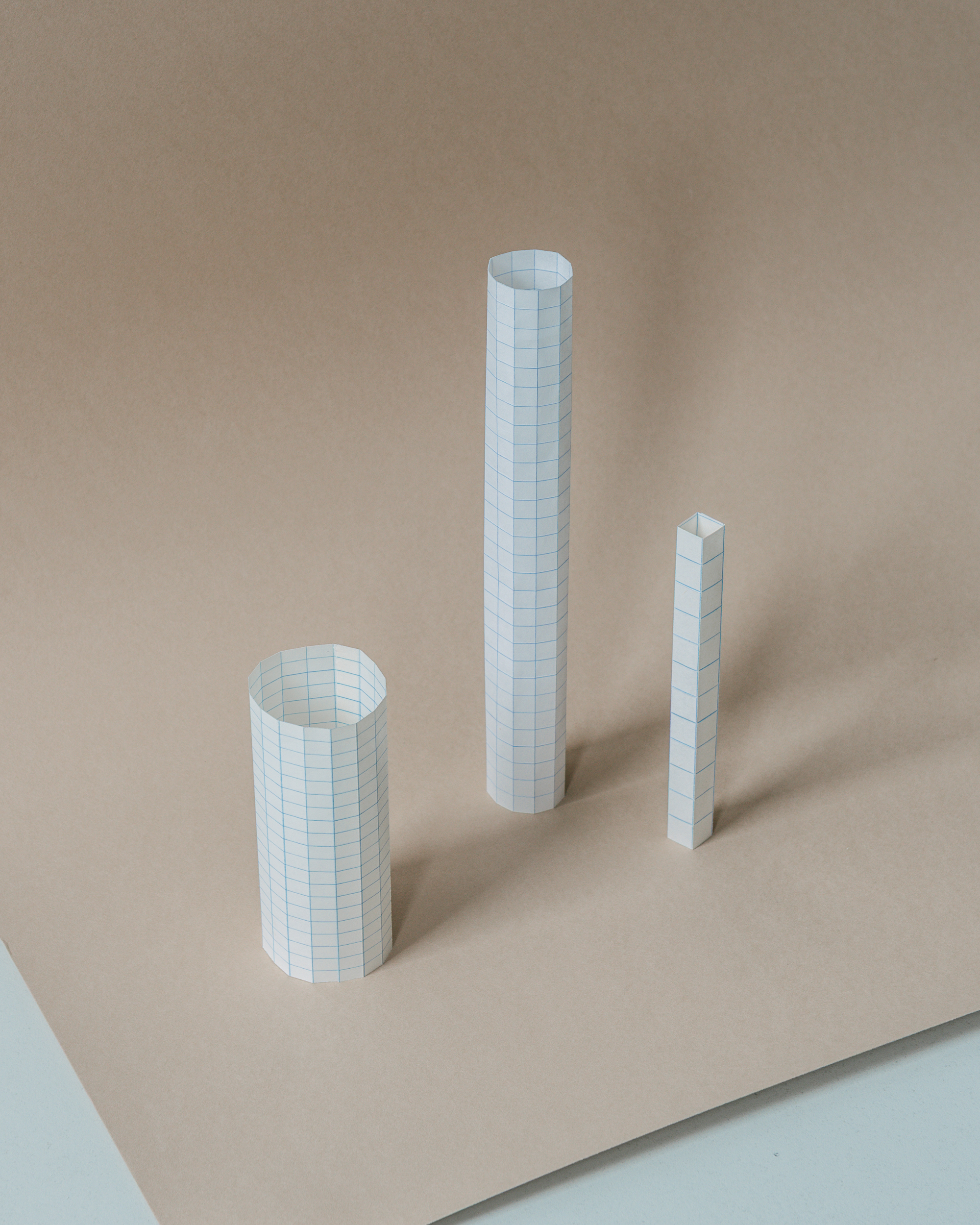
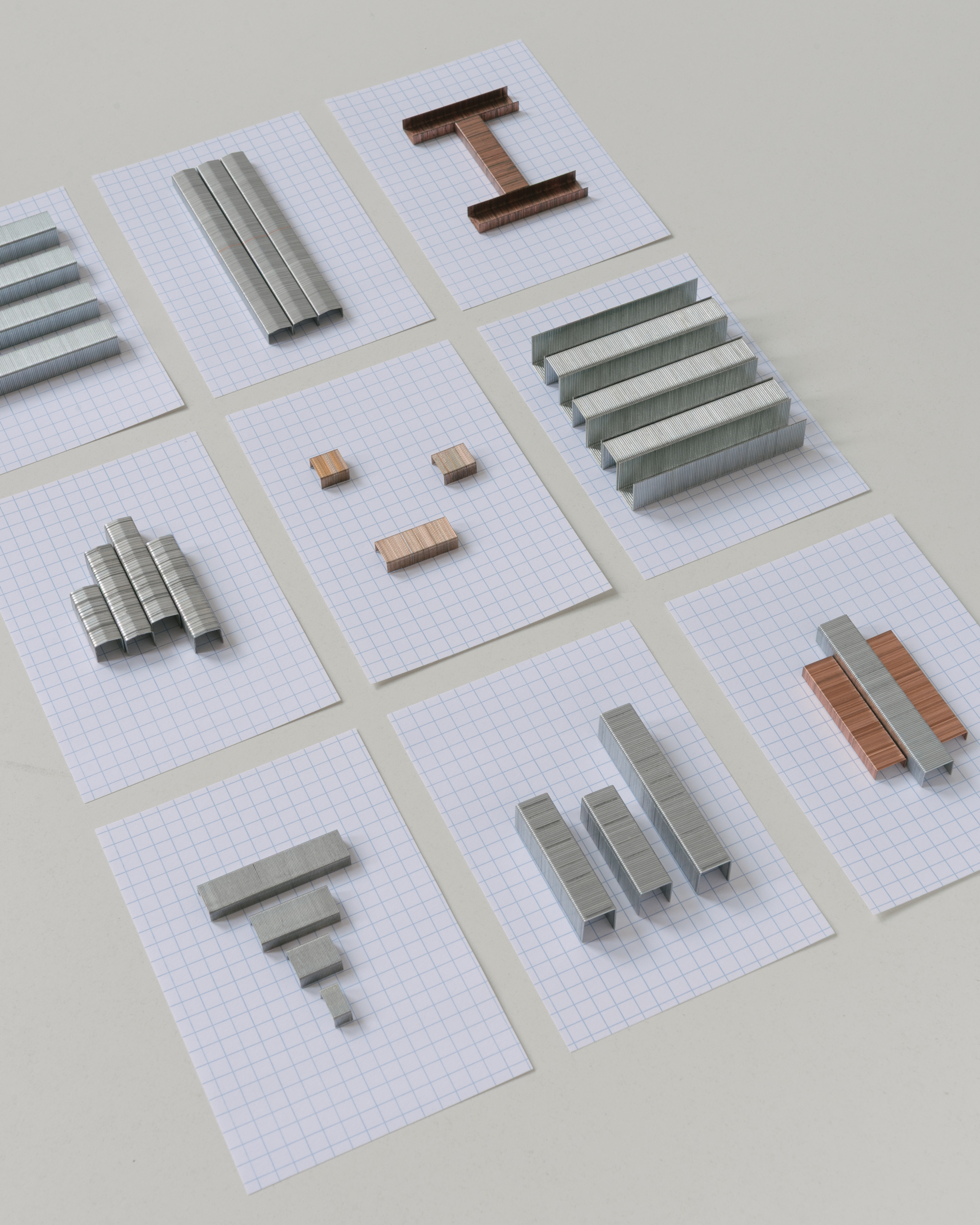
Collages, weavings, and sculptural compositions created with paper and materials from office and school environments, collected over many years across Sweden and Europe.
By shifting them from strict function to playful experimentation, I explore how the everyday can become physically and visually expressive.
パターン Pattern
24 pages, edition of 50
Self-published
2025
During a residency in Sapporo, Japan in the summer of 2025 I spent my days walking—observing, collecting, and photographing the city’s visual patterns. Traces of time passed and of human presence in the wear of surfaces, in routines made visible, in things arranged and left behind. Produced entirely—from first photograph to final publication—in Sapporo.
My goal was to create a work that is closely tied to the place where it was made. The book’s format is meant to take the reader on a journey of discovery similar to my own experience in the city. Read like a regular book, it follows tatami proportions, while each spread forms a square based on the unit of tsubo. The pages can be taken apart and rearranged, or used as posters.

パターン Pattern
2025Exhibition
Sapporo Tenjinyama
Art Studio, Japan

Fruta Et Cetera
26 pages, edition of 50
Self-published
2017
Fruta Et Cetera explores everyday food markets across southern and eastern Europe. These markets, once common but now largely gone from my own country, fascinate me with their visual richness: colours, textures, and the organic rhythm of daily life.
Taken during my travels in 2016, the images weave together markets from different cities into one shared story of ordinary life, culture, and community.

Twenty-Six Views of Mount Fuji
88 pages, edition of 1
2016


Twenty-Six Views of Mount Fuji is ‘an unsystematic self-observation study on repetition’ where images from my personal archive 2007-2016 are combined into diptychs solely based on visual similarity.
Born out of a feeling of stagnation in my own artistry, I wanted to examine if my photographic eye really was as monotonous as I suspected. (Spoiler: it was.) As I combed through my vast archive, the question of ‘how?’ was more important to me than the ‘why?’.
An index of the entire archive in file name order allows for random combinations that contradict the diptychs. The book’s format, printing and binding methods are borrowed from scientific studies done in the ‘70s.
Born out of a feeling of stagnation in my own artistry, I wanted to examine if my photographic eye really was as monotonous as I suspected. (Spoiler: it was.) As I combed through my vast archive, the question of ‘how?’ was more important to me than the ‘why?’.
An index of the entire archive in file name order allows for random combinations that contradict the diptychs. The book’s format, printing and binding methods are borrowed from scientific studies done in the ‘70s.

Exhibited at Galleri Rotor2, 2016.