目に留まる (Noticing)
Air 湯 Yu,
Matsuyama, Japan
2026
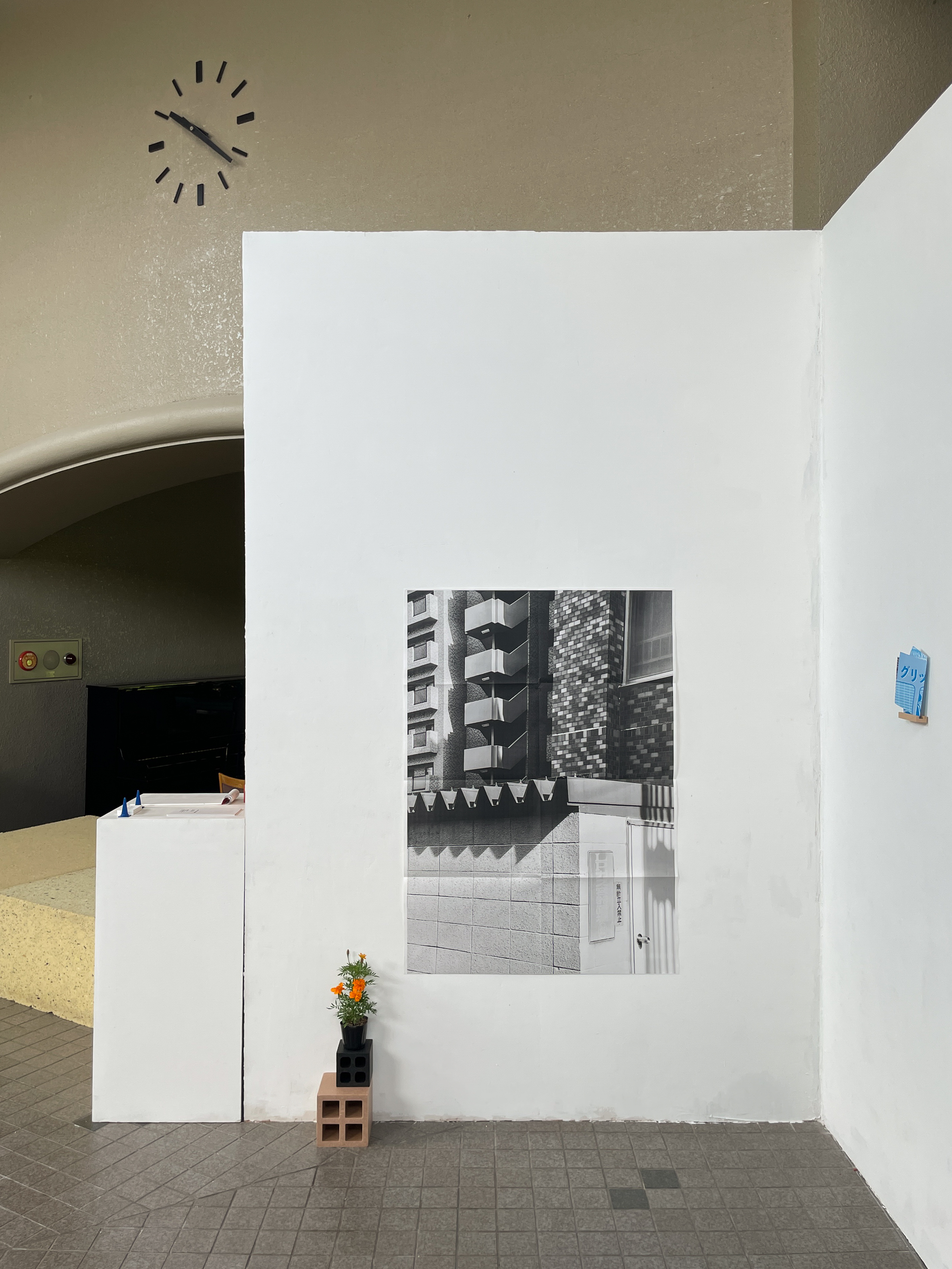
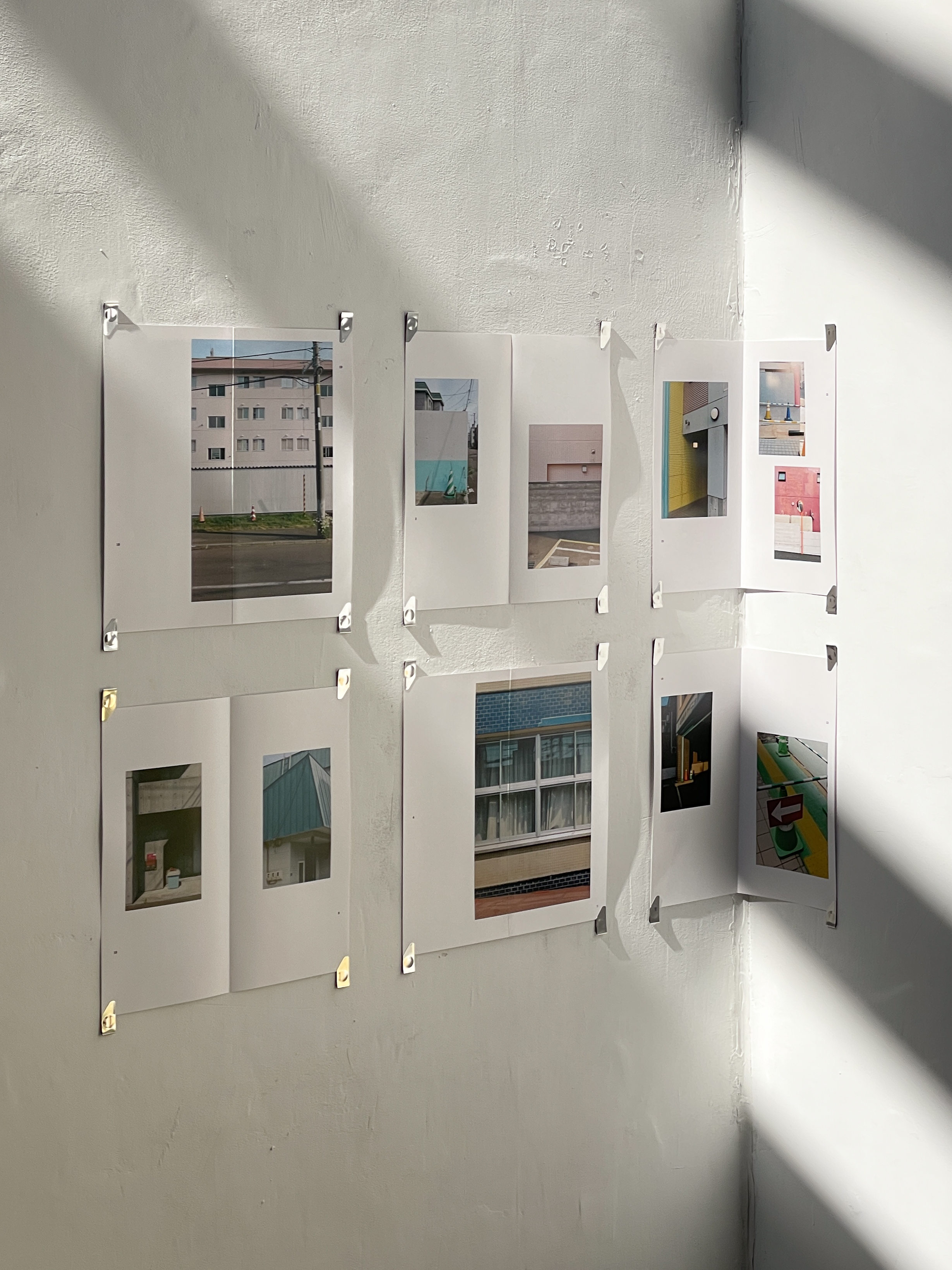
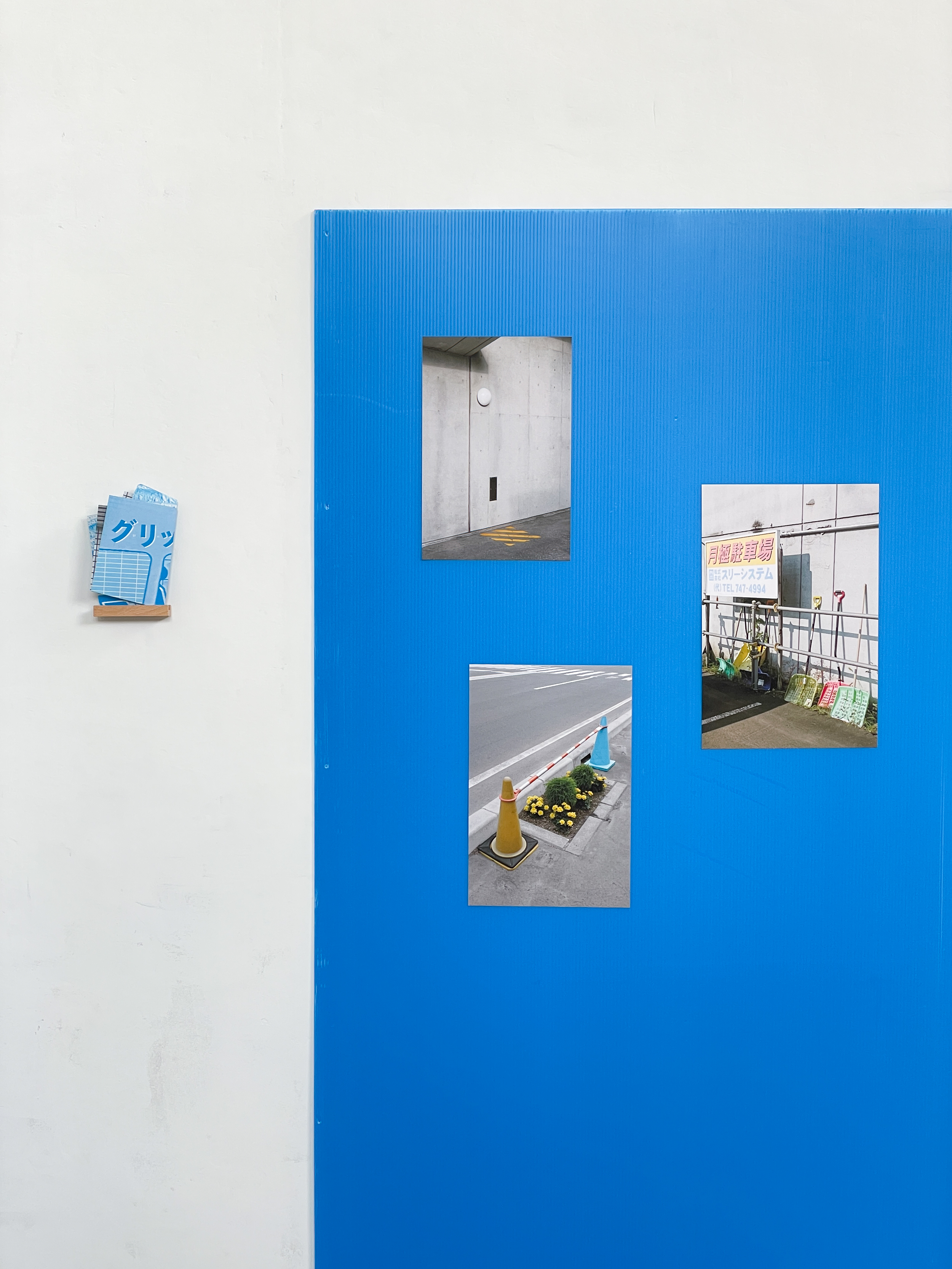
During a month-long stay in Japan, I explored my surroundings through walking, observation, and collection. Through cyanotype on washi paper, collected objects, photography, and paper bleached by the summer sun, I worked with what I encountered, while also bringing ordinary contemporary materials into dialogue with traditional Japanese materials and forms.
The works are shaped by my position as a visitor. Things that may be ordinary and almost invisible to someone who encounters them every day became noticeable to me because they differed from what I am used to in Sweden.
The works are shaped by my position as a visitor. Things that may be ordinary and almost invisible to someone who encounters them every day became noticeable to me because they differed from what I am used to in Sweden.
At the same time, some unfamiliar objects and colors carried an unexpected sense of nostalgia. I became interested in this tension between familiarity and unfamiliarity, and in how closely looking at something can change its meaning.
Menitomaru is a record of this process of noticing: of moving through a place, paying attention to what repeatedly catches the eye, and allowing those observations to become a way of understanding my surroundings.
Menitomaru is a record of this process of noticing: of moving through a place, paying attention to what repeatedly catches the eye, and allowing those observations to become a way of understanding my surroundings.


しつらえ Shitsurae
Sapporo Tenjinyama
Art Studio, Japan
2026
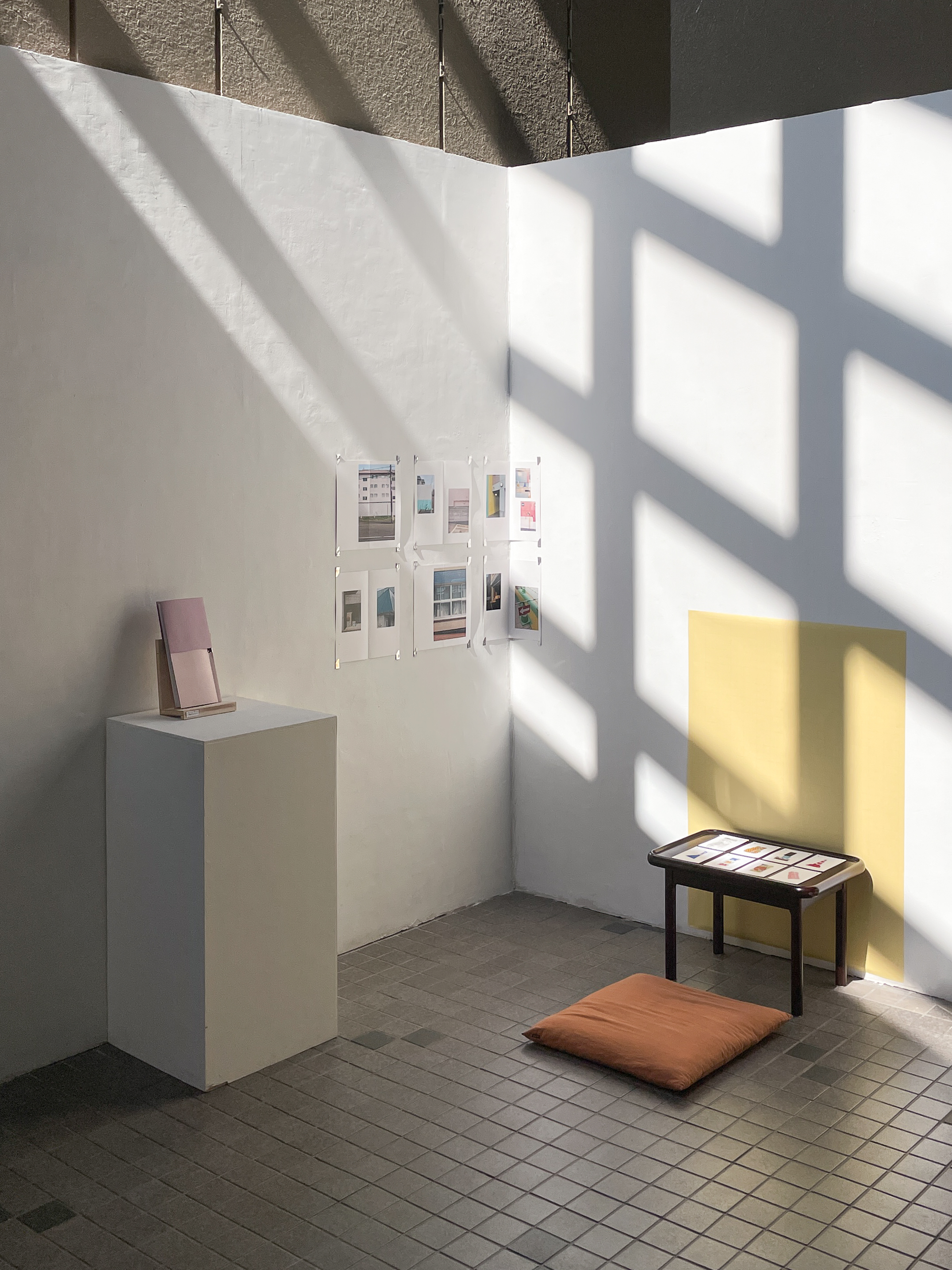
Shitsurae began with a question: If I had a tokonoma, what would I place in it?
Plastic is a material that often carries strong negative associations and can feel almost forbidden to admire. Yet in Japan it is everywhere. Handmade objects in natural materials exist alongside plastic versions of themselves, and the plastic objects are wrapped in plastic packaging. The pastel palette of soft green, blue, yellow, and pink is equally ubiquitous.
I find myself drawn to these objects wherever I encounter them in shops, restaurants, public baths, or on the street. Although many are newly manufactured, they carry a strange sense of nostalgia. Perhaps they remind me of my childhood; perhaps they simply belong to a visual language that has largely disappeared where I come from.
Plastic is a material that often carries strong negative associations and can feel almost forbidden to admire. Yet in Japan it is everywhere. Handmade objects in natural materials exist alongside plastic versions of themselves, and the plastic objects are wrapped in plastic packaging. The pastel palette of soft green, blue, yellow, and pink is equally ubiquitous.
I find myself drawn to these objects wherever I encounter them in shops, restaurants, public baths, or on the street. Although many are newly manufactured, they carry a strange sense of nostalgia. Perhaps they remind me of my childhood; perhaps they simply belong to a visual language that has largely disappeared where I come from.
The installation draws on the Japanese practice of shitsurae—the careful arrangement of objects within a space—and on the tokonoma as a place where selected objects are given attention.
For many Japanese viewers, these are ordinary household objects. For me, they are unfamiliar, carefully observed, and deeply loved. Their arrangement invites these everyday objects to be regarded with the attention traditionally reserved for objects of contemplation, asking how attention, context, and affection can transform the way we see ordinary things.
For many Japanese viewers, these are ordinary household objects. For me, they are unfamiliar, carefully observed, and deeply loved. Their arrangement invites these everyday objects to be regarded with the attention traditionally reserved for objects of contemplation, asking how attention, context, and affection can transform the way we see ordinary things.


SOL Y SOMBRA
Gapet, Göteborg
2026
When I travel, I am confronted with the distance between my idea of a place and what it is actually like. In that gap, I search for small glimpses where the dream still lingers. As tourists have always done, I manipulate the image of the place—through the camera and through souvenirs—so that it matches the version I wish to remember.
I have returned to Costa del Sol many times, and with each visit the dream fades a little more. SOL Y SOMBRA is my attempt to preserve it. Perhaps the dream is just as true as reality after all?


パターン Pattern
2025Sapporo Tenjinyama
Art Studio, Japan